
The return to school in Pakistan brings a major shift in daily routines—and usually a sudden spike in morning road traffic. Handling this transition smoothly comes down to two main efforts: building disciplined habits at home and employing strategic commuting habits on the road.
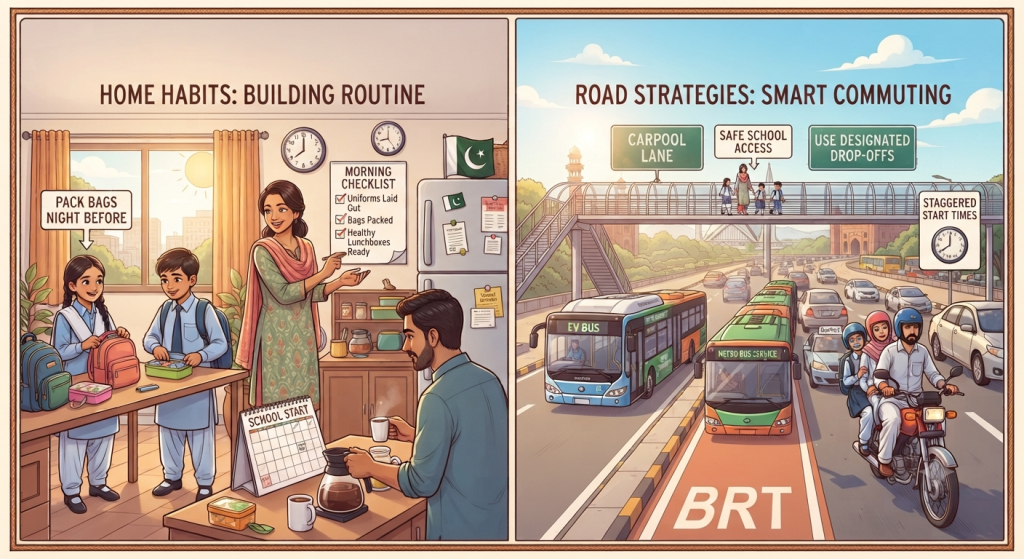
1. Key Habits to Build & Monitor
A smooth school morning starts 12 to 24 hours earlier. Rebuilding these core habits with your children ensures everyone stays calm and punctual.
Morning & Evening Routines
- Shift Sleep Schedules Early: Start adjusting bedtimes 7–10 days before school starts by moving sleep and wake-up times back by 15–30 minutes each day.
- The “Night-Before” Protocol: Eliminate morning decision fatigue by finalizing three things every evening:
- Uniforms & Shoes: Ironed, polished, and laid out.
- Bags & Supplies: Books packed according to the schedule, assignments signed, and water bottles ready.
- Lunchbox Plan: Pre-cut fruits or prepare snack ingredients to avoid last-minute cooking.
- Zero-Screen Mornings: Avoid TV, phones, or tablets before leaving home. Screens slow down children’s focus and create unnecessary morning friction.
- High-Protein Breakfast: Skip high-sugar cereals or heavy, oily parathas that cause energy crashes midway through the first period. Opt for eggs, oats, or milk with whole-grain bread for sustained focus.
Emotional Readiness
- Talk Through Back-to-School Anxiety: Ask open-ended questions about what they are looking forward to or nervous about. A 5-minute conversation eases transition stress significantly.
2. Strategies to Avoid & Navigate School Traffic
Peak traffic hours in urban areas (like Lahore, Karachi, Islamabad, or Rawalpindi) typically run from 7:15 AM – 8:15 AM and 1:00 PM – 2:30 PM. Avoid getting stuck in bottlenecks with these practical road strategies:
[ Home ] ──( Leave 15 min early )──> [ Bypass Main Strip ] ──> [ Park-and-Walk Drop ]
Route & Time Management
- The “15-Minute Shift”: Leaving home just 15 minutes earlier than average can cut your commute time in half. Traffic density scales exponentially in the final 20 minutes before school gates close.
- Map Alternate “Back-Door” Routes: Avoid main educational corridors or primary boulevards where multiple large schools line the same street. Identify service roads, residential shortcuts, or secondary gates.
- Use Live Navigation Apps: Check Google Maps or Waze before turning the key to spot sudden congestion caused by school buses or double-parked vehicles.
Smart Drop-Off & Pick-Up Tactics
- Adopt “Park & Walk”: Instead of driving straight into the congested lane directly in front of the school gate, park 200–300 meters away on an open side street and walk your child the rest of the way. You will save 15–20 minutes of idling in gridlock.
- Organize Neighborhood Carpools: Coordinate with 2–3 neighboring families attending the same or nearby schools. Reducing the number of cars dropping off kids directly cuts down traffic volume for everyone.
- Never Double-Park: Avoid stopping in active traffic lanes to let children out. Pull completely to the curb to keep the flow moving and prevent rear-end collisions.
Summary Checklist
| Focus Area | Key Action | Goal |
|---|---|---|
| Habits | Reset sleep schedule 1 week prior | Prevents sluggish, delayed mornings |
| Preparation | Pack bags & lay out clothes at night | Saves 15–20 minutes every morning |
| Commute | Leave 15 minutes before peak window | Avoids major school-zone bottlenecks |
| Drop-off | Park 200m away & walk | Bypasses gate-side gridlock |
Leave a thought 🤔 (0)
Be the first viewer to leave a thought!