
The nostalgic longing for the 10-cigarette pack (often colloquially referred to in the market as “half-packs” or pocket packs) among adult smokers in Pakistan boils down to economic pressure, habit management, and everyday convenience.
The Government of Pakistan phased out and strictly banned the manufacturing and sale of cigarette packs containing fewer than 20 sticks (alongside bans on selling loose single cigarettes) under tobacco control laws aimed at deterring youth and lower-income demographics by raising the financial barrier to entry.
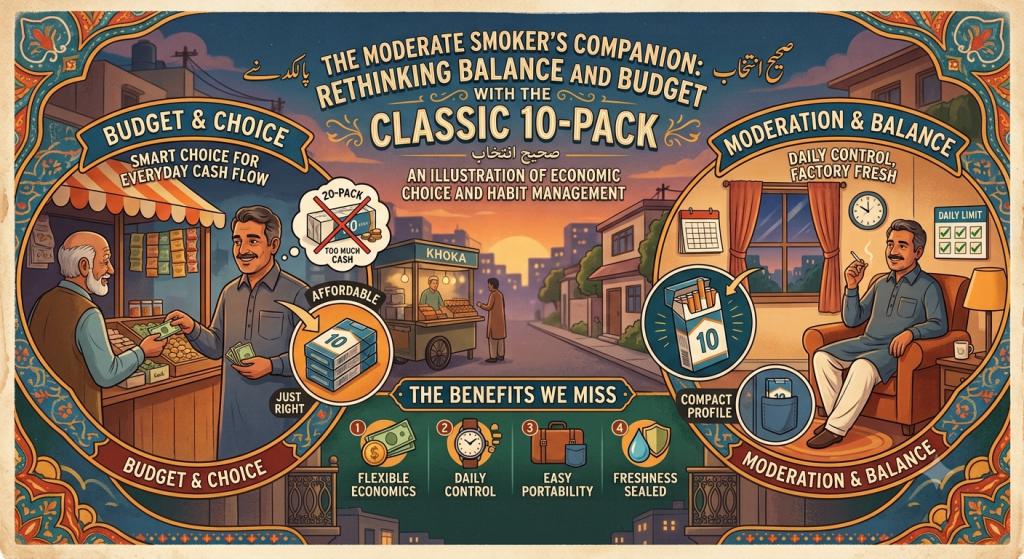
Adult smokers often miss the 10-pack for several key reasons:
1. Financial Flexibility and Inflation
The primary reason adult smokers miss the 10-pack is liquidity and cash flow. Driven by repeated increases in the Federal Excise Duty (FED) and general inflation, the price of a standard 20-cigarette premium or mid-tier pack has escalated significantly.
- The Budget Constraint: Buying a full pack of 20 requires a larger upfront cash outlay. For daily-wage earners or those managing tight weekly budgets, a 10-pack represented an affordable, bite-sized daily expense.
- The “Loose Cigarette” Premium: While the law also bans selling loose single cigarettes, many local khokas (street kiosks) still sell them informally to accommodate cash-strapped smokers. However, buying single sticks is financially inefficient; retailers charge a premium per stick. The 10-pack offered the perfect middle ground—factory-sealed quality at a lower overall price point.
2. Built-in Consumption Control
For many adult smokers, the 10-pack served as a psychological and physical tool for rationing.
- Micro-Management: A smoker trying to cut back or limit their daily intake to 8–10 cigarettes found a natural boundary in the smaller pack.
- The Temptation of Plenty: With a 20-pack sitting in a pocket, it is incredibly easy to over-smoke simply because the supply is there. A 10-pack enforced a hard daily cap; once it was empty, obtaining more required a conscious trip back to the store, helping smokers regulate their habit.
3. Pocket Portability and Discretion
The physical footprint of the packaging played a significant role in its popularity.
- The “Slim” Profile: A 10-cigarette pack is thin, compact, and slips seamlessly into a front shirt pocket or tight jeans without creating a bulky, noticeable bulge.
- Social Discretion: In Pakistani society, smoking often carries a social stigma, particularly around elders or conservative family settings. The smaller, more compact 10-pack was much easier to conceal quickly in a pocket, wallet, or small compartment.
4. Freshness
In humid regions or during the monsoon season, cigarettes left in an opened pack can absorb moisture, losing their crispness and flavor. For a moderate smoker who only consumes a few cigarettes a day, a pack of 20 sits open for days. A 10-pack ensured that the cigarettes were consumed quickly enough to maintain their factory freshness from the first stick to the last.
Leave a thought 🤔 (0)
Be the first viewer to leave a thought!