
Navigating social situations and avoiding being pulled into conversations filled with fake smart ideas, emotional tricks, and illogical thinking means knowing your limits and improving how you think and process information. Setting clear limits helps you decide when and how you take part in conversations, so you don’t get caught up in unstructured, unproductive chats.
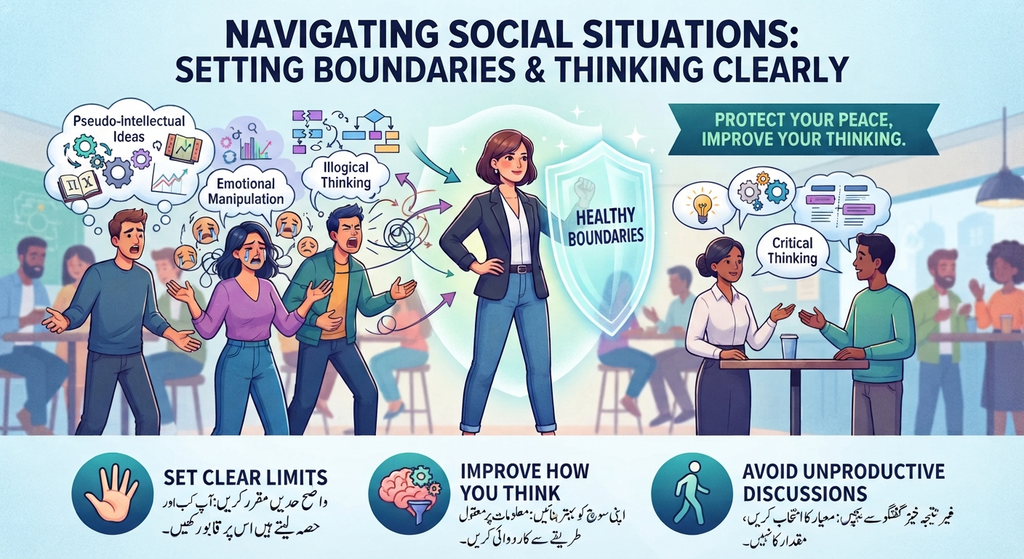
Ask for clear answers right away.
A lot of nonsense comes from vague ideas and catchy phrases.
Ask straightforward questions instead, such as “What is the real outcome of this?” or “What proof is there for that?” When you ask for actual evidence, the majority of unsubstantiated statements come apart. Notice when someone is trying to start an argument or make you feel strong emotions. Respond with calm, neutral words like, “That’s an interesting view” or “I see it differently,” and change the subject without defending your opinion. Set strict time or attention limits on conversations that don’t go anywhere. Use phrases like, “I need to focus on something else right now” or “Let’s talk about this again when we have real facts,” to keep your mental energy safe.
Managing what you take in is important.
Reduce time spent on places where false information and strong emotions are common.
Replace sensational content and social media with reliable sources like scientific research and expert opinions. Be careful about who you spend time with. Avoid people who use bad logic, spread gossip, or believe in wild theories. Spend time with people who think clearly and use facts.
Build a clear way of thinking to keep yourself grounded.
When you hear crazy ideas, don’t let them affect your mindset.
Use simple, basic reasoning instead of accepting commonly believed ideas without proof. Stay calm and detached when someone says something absurd. Treat it like background noise instead of something to argue about. This helps you avoid getting burned out mentally.
These are strategies for work, personal life, or how you use them in real life. Handling emotional noise, false arguments, or drama in personal relationships means setting strong limits without cutting off all connections. Since relationships involve feelings, the goal isn’t just to win an argument but to protect your mental space while keeping the relationship healthy. If someone talks about ungrounded fears, wild theories, or exaggerated stories, ask them clearly whether they want to express feelings or discuss real solutions. This helps them decide if they’re sharing emotions or facts. If they bring up a big or unreasonable situation, push them back to reality by asking, “What real action are you taking about this today?” The discourse will come to a standstill if they respond “none.” Use the “Gray Rock Method” to stop people who like to argue or push buttons. Keep your responses short and neutral without showing strong emotions. Use phrases like “I see,” “That is an interesting take,” or “Fair enough.”
Avoid defending your position against people who don’t use facts.
If someone questions your rational view point, Simply state, “I am comfortable with my position on this,” and move on. Plan conversation limits ahead of time and clearly state them when they’re broken. Set limits early in talks, like, “I value our relationship, but I don’t talk about politics or gossip with family. Let’s talk about our project instead.” If someone keeps bringing up nonsense even after you’ve set limits, walk away calmly. Say something like, “I’m going to take a break” or “I need to leave now. “Let’s catch up later.”
In particular type of relationships like family, friends, or a partner where this kind of conflict happens most often.
Leave a thought 🤔 (0)
Be the first viewer to leave a thought!