Rapid urban growth and high population in Pakistani cities lead to limited space, heavy traffic, and safety issues, making traditional street games less practical and more dangerous.
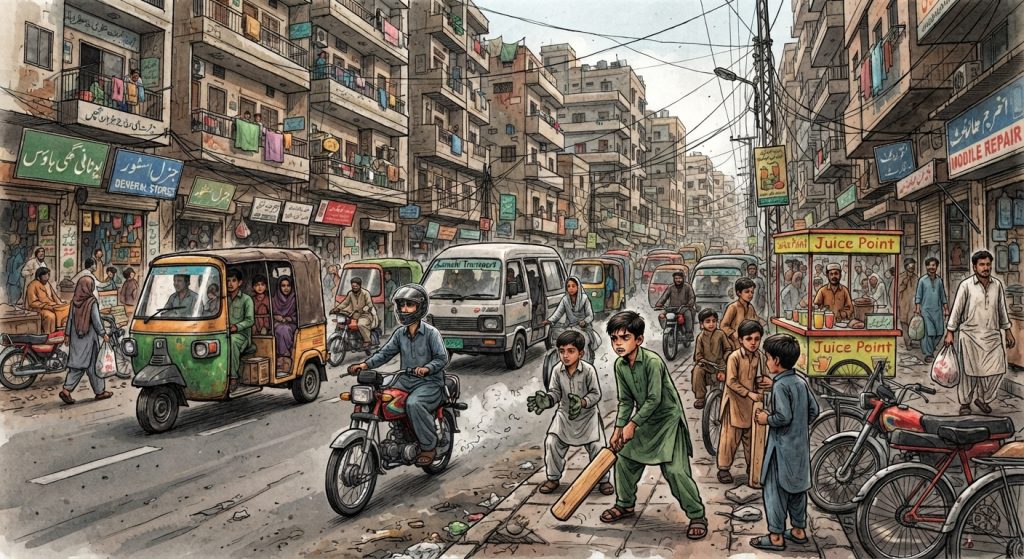
Safety and Health Issues
Traffic Dangers- The busy streets with many vehicles, motorbikes, and careless drivers put kids playing games like cricket or football at risk of getting hurt.
Pollution Problems- Playing outdoors in crowded cities exposes children to a lot of car fumes, smog, and dust, which can harm their lungs.
Urban Layout and Social Problems
Narrow Streets and Traffic Bottlenecks: In densely populated areas like Karachi, Lahore, and Rawalpindi, streets are important for people and emergency vehicles. Playing games on the streets can block traffic and stop people from moving around.
Damage and Conflicts
Without clear areas to play, games can cause damage to parked cars and broken windows, leading to neighborhood arguments.
New Options for Street Games
Community Sports Centers-
Changing empty public land into enclosed sports areas with turf can stop traffic problems and offer safe places to play.
Using Schools and Parks or Organized Local Games
Opening school fields during free times and improving neighborhood parks with safety fences gives kids somewhere to play. Holding regular sports events in proper places keeps the love for local games alive while ensuring safety. Instead of stopping kids from playing, we should move from unstructured street games to safer, planned areas in the city.
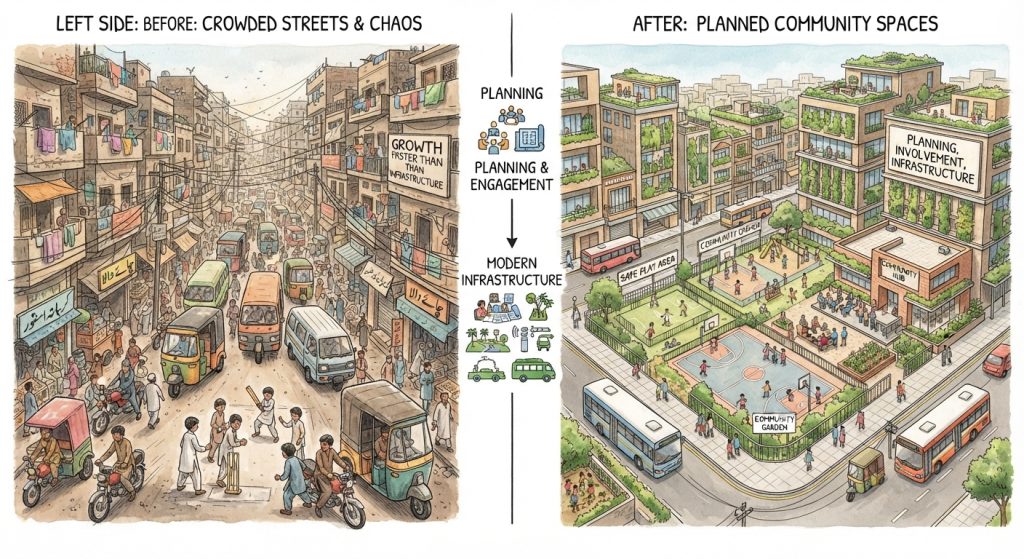
Urban growth in cities like Karachi, Lahore, and Rawalpindi has happened faster than infrastructure
leading to crowded areas without safe outdoor space. To move from street games to safe urban spaces, we need work in planning, community involvement, and modern infrastructure.
Using Unused City Areas
Public-Private Projects
Local governments can work with private companies to turn empty land into small sports areas like mini football or cricket fields.
Using School Facilities- Schools are often closed after hours.
Setting up agreements allows kids to use sports facilities in the evening and weekends with supervision.
Sports on Rooftops- Since space is limited, businesses and community centers can use rooftop areas for games like futsal, table tennis, or badminton, protected by fences.
Improving Existing Parks
Park Zones- Parks often have areas for both adults and kids, leading to arguments.
Dividing parks into sections like ball fields, walking paths, and play areas stops conflicts.
Basic Safety and Services- Adding lights, fences to keep balls off the road, water, and first-aid kits makes parks safer in the evening.
Local Management and Events
Neighborhood Sports Groups- Creating local sports groups with parents, young people, and city officials helps organize use, keep places clean, and make sports affordable for poorer families.
Scheduled Games-Replacing random games with planned neighborhood tournaments makes the environment safer and encourages good sports behavior.
Including Safety in City Planning
Mandatory Green Spaces- City planners must require new housing and high-rises to include sports areas based on the number of people living there.
Traffic Reduction and Play Streets- In places without parks, cities can create “play streets” where certain roads are closed to cars on weekends for kids to play.
Leave a thought 🤔 (0)
Be the first viewer to leave a thought!