

Cricket is much more than just a sport in Pakistan; it is a profound cultural phenomenon, a national obsession, and a unifying force that transcends social, economic, and political boundaries. From the sprawling metropolis of Karachi to the rugged mountains of Gilgit-Baltistan, a bat and a ball can be found in the hands of children and adults alike. To truly understand why cricket holds such a sacred place in the hearts of Pakistani people, one must explore the deep historical roots, the emotional resonance of the game, and its unique power to heal and unite through enduring international friendships—most notably exemplified by the special bond shared with Sri Lanka.
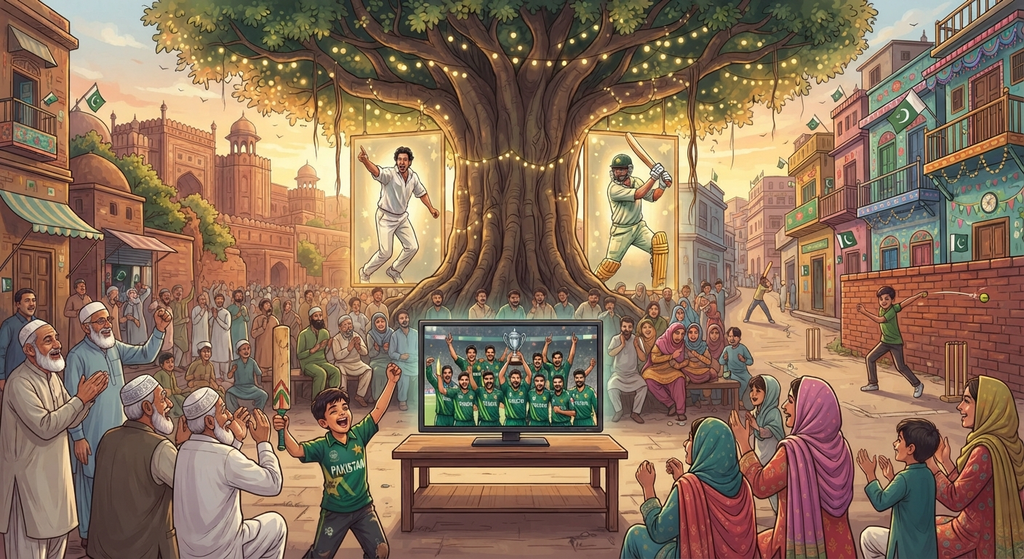
A Post-Colonial Legacy and National Identity
The roots of cricket in Pakistan trace back to the British Raj, but after independence in 1947, the sport quickly transformed into a vehicle for national self-expression. Inheriting a passion for the game from the subcontinent’s shared history, the newly formed nation was eager to carve out its identity on the global stage.
Achieving Test status in 1952, just five years after its inception, Pakistan wasted no time making its presence felt. Historic victories—such as defeating England at the Oval in 1954 during their very first tour—instilled a profound sense of pride. Cricket became a way for Pakistanis to showcase their talent, resilience, and capability to the world. Winning matches against traditional rivals transformed into matters of immense national prestige, cementing cricket as a cornerstone of Pakistani identity.
The Magic of Natural Flair and Unpredictability
Pakistan’s unique style of play has always captivated its people. Unlike the mechanical, textbook precision often associated with other cricketing nations, Pakistani cricket is synonymous with raw, unadulterated flair, unpredictability, and individual brilliance.
The nation gave the world the art of reverse swing, masterminded by legendary figures like Imran Khan, Wasim Akram, and Waqar Younis. Watching these fast bowlers dismantle elite batting line-ups created a generation of awe-struck fans. Similarly, the mesmerizing wrist-work of batsmen like Javed Miandad, Inzamam-ul-Haq, and later Babar Azam showcased a distinct elegance. This “cornered tigers” mentality—the ability to snatch victory from the jaws of defeat through sheer passion—mirrors the daily resilience of ordinary Pakistanis, making the national team deeply relatable.
Unifying a Diverse Population
In a country rich with cultural, linguistic, and regional diversity, cricket acts as the ultimate social equalizer. On any given street, alley, or rooftop, people from all walks of life come together to play “Tape Ball cricket”—a uniquely Pakistani street adaptation of the game using a tennis ball wrapped in electrical tape for extra pace and swing.
When the Pakistan national team takes the field, ethnic and economic divides dissolve. Whether it is a corporate executive in Lahore or a laborer in Peshawar, the entire nation beats with a single pulse. During major tournaments, streets empty, shops close, and communities gather around television sets. A victory triggers widespread celebrations with fireworks and dancing in the streets, offering a collective release from the socio-economic challenges of daily life.
Beyond Rivalry: The Historic Pakistan-Sri Lanka Bond
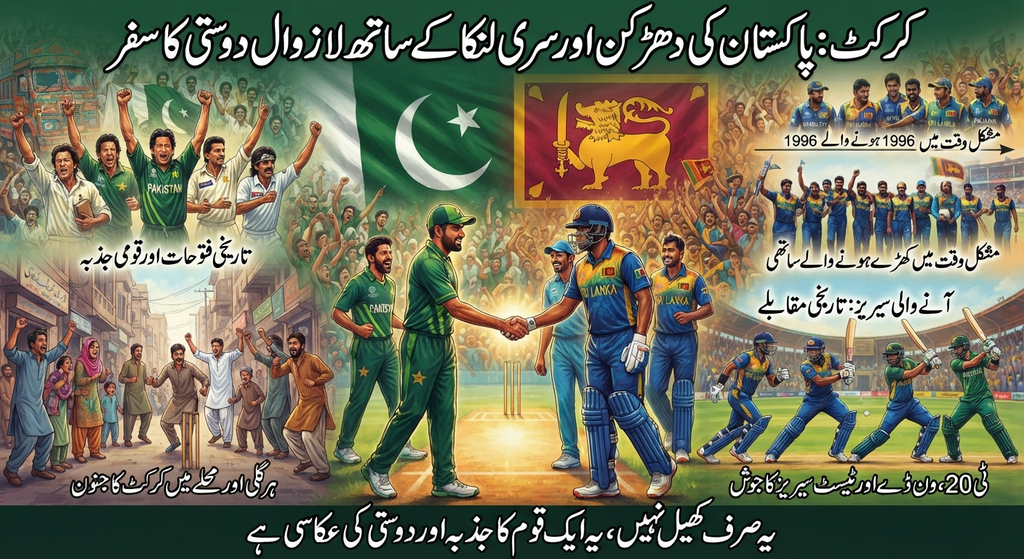
When Pakistan and Sri Lanka face each other on the cricket pitch, it represents much more than a standard bilateral series. While fierce competition defines the action in the middle, the relationship between these two cricketing nations is built on a foundation of profound mutual respect, historic solidarity, and shared sportsmanship.
The cricketing ties between Pakistan and Sri Lanka hold a special place in international sports history. Decades ago, long before Sri Lanka became a global powerhouse and a 1996 World Cup champion, Pakistan was a vocal and active advocate for Sri Lankan cricket, championing their right to gain Test status on the international board.
This early support created a deep reservoir of goodwill. For generations of cricket fans in both nations, matches between the two sides have rarely been marred by toxic hostility. Instead, they are viewed as a celebration of subcontinental flair, spin-bowling mastery, and resilient batsmanship.
Mutual Solidarity in Times of Need
The true strength of the Pakistan-Sri Lanka cricket relationship was tested and proven during cricket’s most challenging modern trials. Following the tragic security incident in Lahore in 2009, international cricket was effectively barred from Pakistan due to safety concerns, isolating the country from hosting major tours.
Throughout those difficult years, Sri Lanka stood firmly by Pakistan. Despite immense pressure, the Sri Lankan national team was among the first to break the isolation, returning to play matches on Pakistani soil and helping pave the way for the full-scale revival of international cricket in the country. This act of solidarity cemented an unbreakable bond between the two fanbases; when Sri Lanka plays in Pakistan, they are met not just as opponents, but as cherished and deeply respected guests.
The Blockbuster Tour: Sri Lanka’s Visit to Pakistan
The historic partnership enters an exciting new chapter as the Sri Lanka men’s national team tours Pakistan for a comprehensive multi-format series. This blockbuster itinerary promises high-octane entertainment, combining explosive shortest-format matches, a high-stakes One Day International (ODI) tri-series, and crucial red-ball battles counting toward the ICC World Test Championship.
A Packed Multi-Format Schedule
The tour is designed to test every facet of both squads, spanning across premier venues in Rawalpindi and Lahore:
The T20I Leg (October 9 – 13): The tour kicks off with a three-match T20 International series hosted under lights at the Rawalpindi Cricket Stadium. These matches offer both sides an early opportunity to test aggressive bench strengths and fine-tune powerplay strategies.
The ODI Tri-Series (October 18 – 31): Immediately following the T20s, the action expands dramatically. Pakistan and Sri Lanka are joined by England for a fiercely competitive ODI tri-series. Fixtures alternate between Rawalpindi and Lahore, culminating in a grand final at the Gaddafi Stadium on October 31.
The Test Series (November 9 – 21): Part of the ICC World Test Championship cycle, the two-match red-ball series sees the first clash played in Rawalpindi (November 9–13) before heading to Lahore for the final showdown (November 17–21).
Tactical Battles on the Field
When these two teams collide, fans can traditionally expect a fascinating tactical chess match. Pakistan’s formidable pace attack looks to exploit early seam movement, while Sri Lanka’s clever spin department and resilient middle-order batters aim to disrupt rhythm. Furthermore, the inclusion of England in the mid-tour ODI tri-series adds an extra layer of competitive pressure, meaning both Pakistan and Sri Lanka must hit the ground running right from the first fixture
Ultimately, cricket is woven into the very fabric of Pakistani society because it mirrors the nation’s spirit: resilient, passionate, unpredictable, and fiercely proud. It transforms everyday struggles into moments of shared celebration and gives millions of people a common language of hope. When enriched by historic friendships like the one shared with Sri Lanka, the sport transcends borders, proving that fierce athletic competition and genuine human camaraderie can happily coexist. As long as children are playing tape-ball matches in narrow alleyways across the country, cricket will remain the undisputed heartbeat of Pakistan.
Leave a thought 🤔 (0)
Be the first viewer to leave a thought!