

Shipping containers are the unseen heroes of today’s global trade.Whether you’re stuck in traffic behind a big 18-wheeler or just passing by a freight yard, those big rectangular metal boxes on the backs of trucks are essential for bringing almost everything we buy to us.
To help you understand more about these common giants on the road, here’s a detailed look at truck containers, their different types, and how they help keep the world moving.
Inside a Truck Container
At first glance, a shipping container may look like a simple steel box, but it’s actually a highly designed piece of logistics equipment.
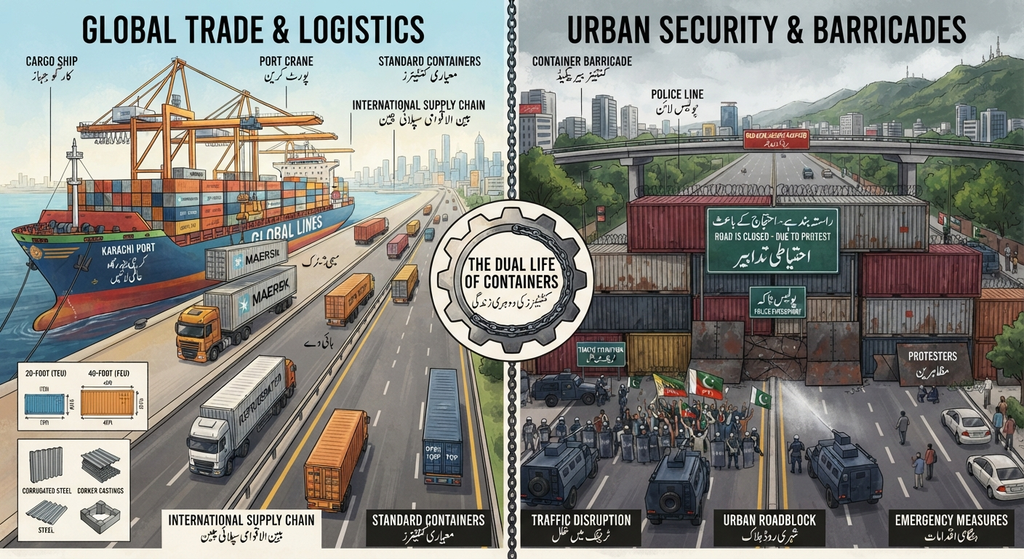
- Standard Sizes: Most containers you see on trucks are either 20 feet (TEU) or 40 feet (FEU) long.
This standard size helps them move smoothly from cargo ships to train flatbeds and finally to truck chassis. - Corrugated Steel Walls: The wavy pattern on the walls (corrugation) makes the thin steel very strong.
This allows heavy containers to be stacked safely on top of each other without bending or collapsing. - Corner Castings: The strong steel brackets at each of the eight corners are the key points that connect the container to the truck.
They use twist locks to keep the container secure, so it won’t slide off during sharp turns or sudden stops.
Different Types of Containers on the Road
Not all containers carry the same kind of goods. Depending on what they carry, you’ll see different types of containers on the highway:
Dry Vans (General Purpose)
These are the most common containers you see. They are fully enclosed and weatherproof, used to transport everyday dry items like clothes, electronics, non-perishable food, and furniture.
Refrigerated Containers (“Reefers”)
If you see a big cooling unit at the front of a container on a truck, it’s a reefer.
These containers keep things at a controlled temperature for items like fresh fruit, meat, dairy, and medicine.They need a special power source on the truck to keep the unit running while the container is moving.
Open-Top Containers
These are used for large or oddly shaped cargo that’s hard to load through the standard back door—like big machines, wood, or long pipes.
They have a removable tarp roof so a crane can lift goods over the top.
Flat Rack Containers
These look like containers without the sides and roof, leaving just a strong steel floor and end walls.
They are used for oversized or heavy items such as big vehicles, machinery, or industrial equipment that can’t fit in a standard container.
Why Truck Containers Matter
The system of containerization revolutionized shipping in the mid-20th century, and trucks are the vital final link in that chain.
Before standardized containers, goods had to be loaded and unloaded manually piece by piece—a process that was slow, labor-intensive, and expensive. Today, a container can be packed at a factory in Asia, loaded onto a ship, transferred to a train, locked onto a semi-truck, and delivered directly to a warehouse halfway across the world without the cargo ever being unpacked along the way.
Next time you see a massive metal box rolling down the highway, you’ll know it represents a marvel of engineering and global coordination! If you travel through major urban centers in Pakistan—particularly Islamabad and Rawalpindi—you will likely notice a sight that is rare in most other parts of the world: massive, towering rows of colorful shipping containers resting directly on asphalt roads, highway interchanges, and entry points, their presence on Pakistani city streets tells a completely different story. They are not waiting to be loaded onto a freight train or cargo ship; instead, they serve as heavy-duty improvised barricades.
The Ultimate Political Blockade
The primary reason shipping containers line Pakistani roads is to control political demonstrations, long marches, and rallies.
When opposition parties or religious groups announce plans to march toward a city’s sensitive areas—such as Islamabad’s “Red Zone,” which houses parliament, government ministries, and diplomatic enclaves—local administrations face a massive crowd-control challenge.
Rather than relying solely on police lines, authorities deploy hundreds of heavy freight containers to seal off key avenues and highways. Because these steel boxes weigh tons and are difficult to move without specialized heavy cranes, they act as impenetrable walls. They prevent trucks, cars, and large crowds of protesters from advancing toward high-security zones.
High-Level Security and VIP Visits
Beyond managing domestic political unrest, containers are frequently deployed to safeguard high-profile international events and visits from foreign dignitaries.
When foreign heads of state, delegates, or international economic summits take place in the capital, security agencies lock down entire neighborhoods. By placing containers at major intersections, authorities establish a rigid perimeter. This guarantees foolproof security and insulates sensitive zones from sudden traffic disruptions or potential security threats.
The Logistics of “Emergency Seizure”
The frequent use of containers as makeshift walls has given rise to a unique commercial friction point between the government and the transport sector.
When a major lockdown is ordered, local administrations typically rent or requisition hundreds of commercial containers from goods transport associations. Transporters often voice frustration over these practices, noting that pulling active freight containers off commercial duty to use them as road blocks disrupts national supply chains, strands valuable cargo, and causes financial losses for shipping companies. Furthermore, authorities sometimes weld or fill these containers with sand or ballast to ensure protesters cannot push them aside, rendering them entirely unusable for actual shipping until the political climate cools.
A Source of Public Frustration
While the government views these steel barricades as an effective, temporary measure to maintain public order and security, locals often experience them differently.
For everyday citizens, the sudden appearance of container walls turns quick morning commutes into hours-long ordeals, closes local businesses, and isolates parts of the city. Over the years, this heavy reliance on steel boxes has earned urban flashpoints like Islamabad lighthearted yet weary local nicknames, reflecting how deeply woven these industrial giants have become into the fabric of Pakistani civic life.
Leave a thought 🤔 (0)
Be the first viewer to leave a thought!