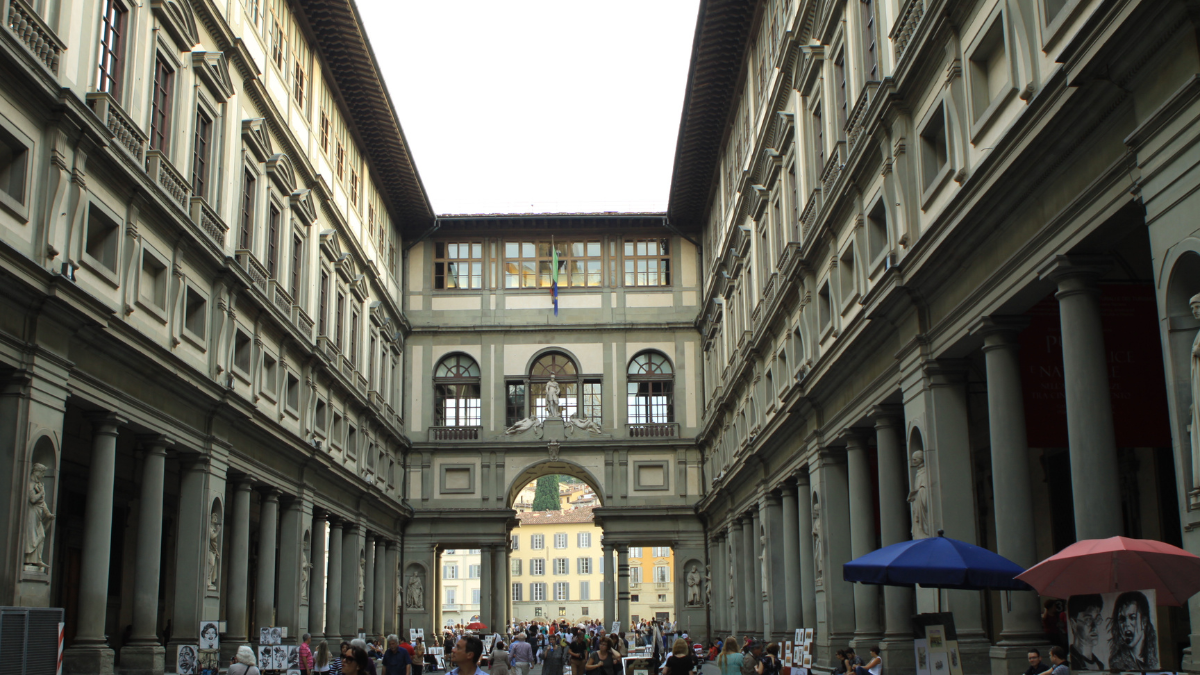
The Uffizi Galleries (Gallerie degli Uffizi), located in Florence, Italy, is one of the most famous, important, and oldest art museums in the world. Housing an unmatched collection of priceless masterpieces—particularly from the Italian Renaissance—it stands as a premier cultural landmark.
History and Architecture
The name Uffizi translates to “offices.” In 1560, Cosimo I de’ Medici, the first Grand Duke of Tuscany, commissioned the painter and architect Giorgio Vasari to design a massive building to consolidate the administrative and judicial offices (uffizi) of Florence under one roof, adjacent to the seat of government at the Palazzo Vecchio.
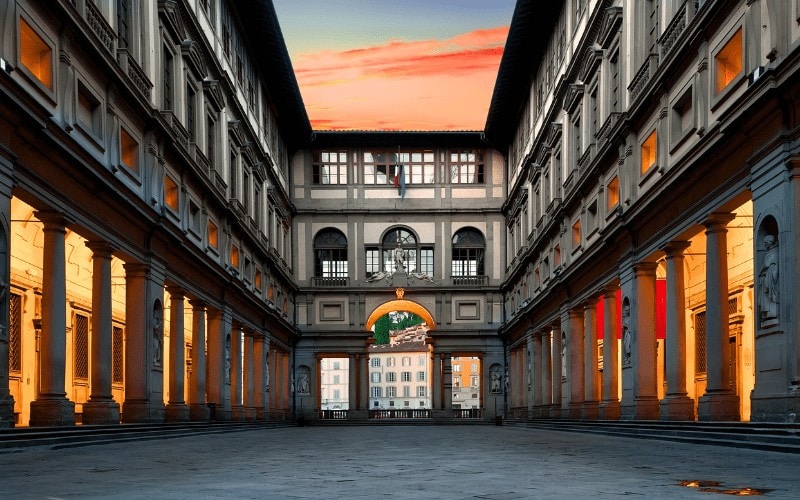
The U-shaped Renaissance structure features a long, elegant courtyard opening toward the Arno River. Following Vasari’s work, Grand Duke Francesco I commissioned Bernardo Buontalenti to transform the top floor into a private gallery to display the Medici family’s sprawling art collection. Over subsequent centuries, the collection expanded significantly through inheritance, gifts, and acquisitions. The preservation of the Uffizi’s treasures is largely credited to Anna Maria Luisa de’ Medici, the last direct descendant of the Medici dynasty. In 1737, she signed the Family Pact, bequeathing the entire Medici art collection to the Tuscan state on the strict condition that it would forever remain in Florence for public enjoyment and could never be dispersed or removed from the city. It officially opened as a public museum in 1769. Built by Vasari in 1565, this famous elevated enclosed passageway connects the Uffizi Gallery across the Ponte Vecchio to the Pitti Palace and the Boboli Gardens, historically allowing the Medici rulers to move safely and privately between their administrative offices and their residential palace.
The Collections and Layout
The museum is organized chronologically across dozens of rooms and corridors, taking visitors on an evolutionary journey through Western art history from the 13th to the 18th centuries. Classical Greek and Roman statues, busts, and sarcophagi collected by the Medici adorn the corridors and specific rooms (such as the famed Niobe Room). Highlights include foundational works by Cimabue, Giotto, and Duccio di Buoninsegna, which revolutionized perspective and human emotion in art. The core of the museum showcases towering figures of art history, including works from the Florentine, Venetian, and foreign schools. While the Uffizi holds thousands of works, several world-famous masterpieces define the collection. Perhaps the museum’s most recognizable symbols, these monumental mythological paintings epitomize the grace, humanism, and beauty of the early Italian Renaissance.

Annunciation and Adoration of the Magi by Leonardo da Vinci: Rare early works and unfinished pieces that highlight Da Vinci’s revolutionary use of light, shadow (sfumato), and atmospheric perspective.
Tondo Doni by Michelangelo: The only finished panel painting by Michelangelo in existence, celebrated for its dynamic composition and sculptural handling of form.
Madonna of the Goldfinch by Raphael: A tender portrait showcasing Raphael’s mastery of pyramidal composition and harmonious balance, heavily influenced by Leonardo.
The Urbino Venus by Titian: A landmark painting of the Venetian school that set the standard for reclining female figures in Western art.
Works by Caravaggio: Including iconic dramatic canvases like Medusa, Bacchus, and The Sacrifice of Isaac, defined by striking contrasts of light and dark (tenebrism).
Artemisia Gentileschi: Famous works like Judith Slaying Holofernes, showcasing her powerful brushwork and dramatic narrative intensity.
Modern Expansion and the Greater Uffizi Complex
To accommodate millions of annual visitors and display works previously kept in storage, the museum underwent major expansions, adding contemporary gallery spaces dedicated to 17th-century Dutch, Flemish, French, and Spanish masters. Today, the Uffizi operates as an administrative umbrella (“The Uffizi Galleries”) that unites the main gallery with the Pitti Palace and the Boboli Gardens, forming a massive cultural hub that bridges both sides of the Arno River.
Pop stars and other high-profile public figures frequently visit the Uffizi Galleries
- Unmatched Artistic Prestige: As home to the world’s finest collection of Italian Renaissance masterpieces—including iconic works by Botticelli, Leonardo da Vinci, Michelangelo, and Raphael—the gallery is a mandatory cultural pilgrimage for global creatives and artists seeking inspiration.
- Cultural and Aesthetic Curiosity: Icons often visit to experience history firsthand, occasionally posing for creative photo-ops or recreating classic art compositions in front of legendary paintings.
- Private and VIP Access: High-profile visitors like pop stars and actors (such as Dua Lipa, Kylie Minogue and Nicole Kidman) are often given specialized private tours by museum leadership, allowing them to appreciate the world-class collections away from the heavy crowds.
- Global Visibility and Expression: Sharing experiences or artistic snapshots from Florence allows public figures to connect with millions of fans worldwide by blending personal travel with appreciation for world heritage.
Leave a thought 🤔 (0)
Be the first viewer to leave a thought!