
Weightlifting is often celebrated for its visible physical benefits, but its impact on neurological health is equally profound. Lifting weights triggers a cascade of physiological and biochemical changes that protect, nourish, and restructure the brain, offering powerful cognitive and mental health benefits.
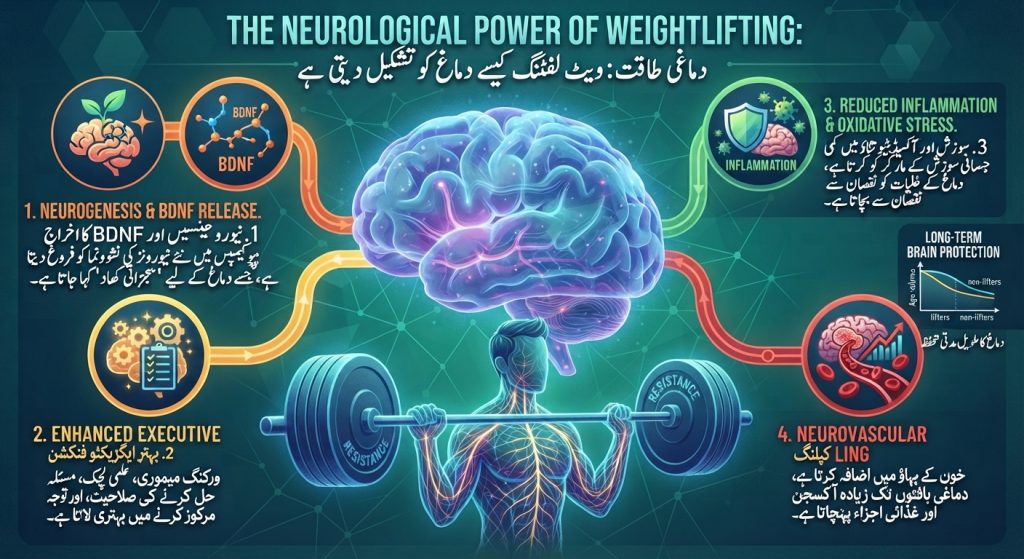
Key Neurological Benefits of Weightlifting
- Neurogenesis and BDNF Release: Resistance training stimulates the production of Brain-Derived Neurotrophic Factor (BDNF), a protein often described as “Miracle-Gro for the brain.” BDNF encourages the growth of new neurons (neurogenesis) and strengthens existing synaptic connections, particularly in the hippocampus—the region critical for learning and memory.
- Enhanced Executive Function: Studies show that regular resistance training significantly improves executive functions, which include working memory, cognitive flexibility, problem-solving, and the ability to multitask and inhibit inappropriate impulses.
- Reduced Inflammation and Oxidative Stress: Chronic systemic inflammation is linked to neurodegeneration and cognitive decline. Weightlifting helps lower systemic inflammatory markers and reduces oxidative stress, protecting brain tissue from long-trm cellular damage.
- Neurovascular Coupling (Improved Blood Flow): Resistance exercise promotes angiogenesis—the formation of new blood vessels—in the brain. This ensures a richer supply of oxygen and essential nutrients, enhancing overall cerebral vitality and metabolic efficiency.
- Mental Health and Stress Regulation: Lifting weights regulates neurotransmitters such as serotonin, dopamine, and norepinephrine, which play vital roles in mood stabilization, stress mitigation, and anxiety reduction.
Mechanisms: How Lifting Shapes the Brain
Unlike purely aerobic exercise, weightlifting introduces unique cognitive and neuromuscular demands. Coordinating complex movement patterns, maintaining stabilization under load, and progressively increasing resistance require intense focus and motor unit recruitment. This constant neural adaptation forces the brain to build denser white matter tracts (the myelin sheaths that speed up communication between brain regions).
Furthermore, the physical resilience built in the gym often translates to greater psychological resilience. Overcoming physical resistance teaches the nervous system to better manage acute stressors, lowering overall baseline cortisol levels and protecting the brain from the corrosive effects of chronic stress.
Long-Term Brain Protection
As we age, both brain volume and cognitive processing speed naturally decline. Longitudinal studies indicate that regular resistance training is associated with a reduced risk of mild cognitive impairment and a slower rate of brain atrophy in older adults. By improving structural integrity in key memory and reasoning centers, weightlifting acts as a potent form of cognitive reserve, safeguarding mental acuity well into later life.
Enhanced Proprioception and Sensory Awareness
When you regularly weightlift, you are training your nervous system to be hyper-aware of your body’s position in space (proprioception). As you improve your mind-muscle connection, you may start to perceive your physical environment differently. You become more attuned to:
Gravity and Tension- Because you are constantly fighting external resistance, your brain becomes more sensitive to the “weight” of things—the feeling of the floor beneath you, the stability of your posture, and even the tension in your own muscles during non-exercise hours.
Kinesthetic Sensitivity- You might notice subtle shifts in your balance or alignment that were previously “background noise.”
The “Afterglow” of Neurotransmitter Regulation- After a heavy lifting session, there is a complex shift in neurochemistry. The combination of endorphins, endocannabinoids, and a reduction in cortisol often leads to a state of calm alertness.
Environmental Processing- Users often report that the world feels more manageable or “in focus” post-workout. This isn’t just a mental outlook; it’s a physiological state where your nervous system has transitioned from a sympathetic (fight-or-flight) state to a parasympathetic (rest-and-digest) state.
Reduced Sensory Gating- When you are chronically stressed, the brain filters out “noise” to protect you. Once your stress markers are lowered through exercise, you may find yourself more present and capable of noticing environmental details that you were previously too overwhelmed to process.
Temperature Regulation and Metabolic Shifts- Weightlifting raises your basal metabolic rate. For hours after a session, your body is effectively running “hotter” due to EPOC (Excess Post-exercise Oxygen Consumption).
Atmospheric Sensitivity- Because your internal thermostat is more active during this recovery window, you may find yourself more sensitive to room temperature, humidity, or air movement. You might feel “warm” in a room where you previously felt neutral, as your body is in the midst of the intensive repair process of building muscle tissue.
Psychological Framing of the “Environment”- There is also a psychological component to how you perceive the atmosphere after a workout. Weightlifting is a form of voluntary struggle. When you successfully handle a heavy load, it creates a temporary increase in self-efficacy. the “atmosphere” of the outside world often feels less threatening or chaotic because your nervous system has just successfully navigated a high-intensity, controlled challenge.
If you are a regular lifter, do you find that your perception of your surroundings changes immediately following a set, or is it more of a lingering effect that changes how you feel throughout the rest of the day?

Here are the primary impacts regular lifters typically observe in their daily lives:
Enhanced Functional Strength and Posture
- Effortless Everyday Tasks: Lifting heavy things in a structured environment makes daily physical labor—carrying groceries, moving furniture, or picking up children—feel remarkably light.
- Joint and Spinal Stability: Stronger stabilizing muscles naturally correct posture. Lifters often notice a significant reduction in the minor aches, lower back stiffness, and shoulder tightness that come from desk work or prolonged sitting.
Metabolic Efficiency and Appetite Regulation
- Fuel Management: Muscle is metabolically active tissue. Regular lifters often notice they can consume more total calories without gaining fat, as their bodies process macronutrients more efficiently.
- Stable Energy Levels: Rather than experiencing afternoon crashes, lifters tend to have steadier blood sugar regulation and sustained energy throughout the day.
Psychological Resilience and Stress Tolerance
- Calibrated Stress Responses: Facing heavy resistance under a barbell trains the nervous system to stay calm under acute stress. Lifters often report that outside stressors (work deadlines, traffic, daily friction) feel less overwhelming because they have practiced enduring physical and mental discomfort.
- Built-In Discipline: The compounding nature of progressive overload translates into other areas of life. Sticking to a lifting schedule builds a framework for consistency in work, nutrition, and personal projects.
Sleep Architecture and Recovery
- Deeper Rest: Physical fatigue paired with muscle repair demands high-quality sleep. Lifters frequently note that their sleep is deeper, making it easier to wake up feeling genuinely rested.
- Body Awareness: Daily posture, movement patterns, and recovery needs (like hydration and nutrition) become second nature, creating a heightened sense of bodily intuition.
Leave a thought 🤔 (0)
Be the first viewer to leave a thought!